What Does Law No. 6458 on Foreigners and International Protection Establish?
In short: what Law No. 6458 gives and does not give
✅ Allowed
- Stay without a residence permit for up to 90 days in every 180 (Article 11) and for as long as a visa is valid (Article 20).
- Obtain one of six types of residence permit: short-term, family, student, long-term, humanitarian, and for victims of human trafficking (Article 30).
- Obtain a short-term residence permit as a property owner (Article 31, point b): up to 2 years at a time.
- Extend a residence permit: apply up to 60 days before it expires and stay until the decision (Article 24).
- Move to a long-term permit after 8 years of uninterrupted residence on a residence permit (Articles 42 and 43); rights almost equal to those of citizens (Article 44).
- Appeal a deportation decision to the administrative court within 7 days of service of the decision (Article 53).
⛔ Not allowed
- Stay in the country beyond the permitted period: overstaying by more than 10 days is among the grounds for deportation (Article 54).
- Work without a work permit (Article 54).
- Use false information or forged documents when applying for a visa or residence permit (Article 54).
- Do military service, vote, hold public office or import a car duty-free on a long-term residence permit (Article 44).
- Stay abroad for more than a year in a row without reasons of health, study or compulsory service: a long-term residence permit is cancelled (Article 45).
- Refugees and holders of a humanitarian permit cannot switch to a long-term residence permit (Article 42).
This is a short summary of the text of the law. Details, quotations of articles and links to the official texts are below. The visa-free stay depends on your citizenship, and amounts and lists of countries are set by secondary acts, so check them on the date of your decision.
Law No. 6458 on Foreigners and International Protection (Yabancılar ve Uluslararası Koruma Kanunu) is the main act that determines how a foreigner enters Turkey, how long they may stay without a residence permit, what types of residence permit exist, when the country may deport a person and how decisions can be appealed. Below, its content is explained in plain language, with quotations from the articles in Turkish and a translation.
The material is for information and does not replace advice from a lawyer. The law is amended, so open the current text on the official portal.
Where the law is published
The law was adopted on 4 April 2013 and published in the Official Gazette on 11 April 2013 under No. 28615. Current text: mevzuat.gov.tr, Law No. 6458. The Gazette issue of 11 April 2013: resmigazete.gov.tr. The practical side is handled by the Presidency of Migration Management, and applications for residence permits are filed through the e-İkamet system.
Structure of the law
- Part One (Articles 1–4): purpose, scope, definitions and the ban on returning a person to a country where they face torture or inhuman treatment.
- Part Two (Articles 5–60): entry and exit, visas, residence permits, stateless persons, deportation and return centres.
- Part Three (Articles 61–95): international protection: refugees, conditional refugees, subsidiary protection.
- Part Four (Articles 96–102): miscellaneous provisions, including judicial appeal and fines.
“Bu Kanunun amacı; yabancıların Türkiye’ye girişleri, Türkiye’de kalışları ve Türkiye’den çıkışları ile Türkiye’den koruma talep eden yabancılara sağlanacak korumanın kapsamına ve uygulanmasına ilişkin usul ve esasları düzenlemektir” (Article 1). The law sets the procedure for the entry of foreigners into Turkey, their stay and their departure, as well as the scope and application of protection for those who ask for it in Turkey.
Entry and visa-free stay
Article 5 requires people to enter and leave the country through border crossing points with a valid passport or a substitute document. Article 7 lists those who are refused entry: for example, people without a passport, visa or residence permit, and those whose passport is valid for less than sixty days after the end of the permitted stay. Article 11 sets the general rule: the period of stay given by a visa or a visa exemption may not exceed ninety days in every one hundred and eighty.
“Vizenin veya vize muafiyetinin Türkiye’de sağladığı kalış süresi, her yüz seksen günde doksan günü geçemez” (Article 11). The period of stay given by a visa or visa-free regime may not exceed ninety days in any one hundred and eighty.
Separate decisions on visas exist for citizens of certain countries, so the period for a specific nationality has to be checked separately.
Residence permit: when it is mandatory
Article 19 provides that anyone who stays longer than the period of a visa or visa-free stay, or longer than ninety days, must obtain a residence permit. A permit loses its force if its holder does not start using it within six months. Article 30 lists six types: short-term, family, student, long-term, humanitarian and a residence permit for victims of human trafficking.
Short-term residence permit (Articles 31–33)
This is the one most property buyers are interested in. Article 31 lists the grounds, among them scientific research, owning property in Turkey (point “b”), commercial ties, tourism, medical treatment, Turkish language courses and investment under a Presidential decision (point “j”). A short-term permit is usually granted for no more than two years at a time, and under points “j” and “k” for no more than five.
“Türkiye’de taşınmaz malı bulunanlar” (Article 31, point b). Foreigners who own property in Turkey may be issued a short-term residence permit.
In 2024 a sixth paragraph was added to the article: the quality and value of the property that serves as the basis for such a permit are determined by the ministry (the amendment was made by Law No. 7533 of 21 November 2024). This means the amount cannot be found in the law itself and has to be checked in the ministry’s decisions and on the migration service’s portal. Conditions for issuing the permit (Article 32): submit documents under the chosen ground, the housing must meet the standards, a certificate of no criminal record is required on request, and an address must be given.
Family, student and long-term residence permits
Articles 34–37 regulate the family residence permit, and Articles 38–41 the student permit. The long-term residence permit is described in Articles 42–45. Under Article 43, a transfer to it requires at least eight years of uninterrupted residence on a residence permit, no social assistance during the last three years, sufficient and regular income, valid health insurance and no threat to public order.
Under Article 44, holders of a long-term residence permit enjoy the rights provided for Turkish citizens, excluding military service, electoral rights, public service and the duty-free import of a car. The President may restrict these rights. Under Article 45 the permit is cancelled if the person seriously threatens order or security, or is outside Turkey for more than a year in a row without reasons of health, study or compulsory service in their own country.
Deportation and appeal
Article 54 lists the cases in which a deportation decision is made, among them: the use of false information or forged documents on entry, when obtaining a visa or a residence permit; working without a permit; overstaying a visa or visa-free stay by more than ten days; breaching the term of a residence permit by more than ten days; and a threat to public order.
“Çalışma izni olmadan çalıştığı tespit edilenler” (Article 54). Among the persons against whom a deportation decision is made are those found working without a work permit.
The deportation decision is served on the foreigner, their legal representative or lawyer, together with an explanation of how to appeal. Under Article 53 (as amended by Law No. 7533), an application to the administrative court can be filed within seven days of service of the decision. Until the time limit for applying expires, or until the proceedings end, the person is not deported unless they consent. Article 25 requires family ties, length of residence and the interests of a child to be taken into account when a residence permit is refused.
What is useful to do in practice
First determine the ground: tourism, property, study, family, work. Then open the relevant article of the law and read the conditions, and check amounts and lists of documents in the secondary acts and on the migration service’s portal. When buying a flat in Mersin, read the step-by-step guide to buying and look at the options in the property catalogue. A general overview of the other laws on the status of foreigners is in the article “Which main laws regulate the stay of foreigners in Turkey”, and on how property and the citizenship law relate, read the article on Law No. 5901.
Extension and change of the ground for a residence permit
Article 24 of Law No. 6458 allows a residence permit to be extended. The application for extension is filed with the directorate no earlier than sixty days before the end of the term and in any case before it expires. The applicant is issued a document free of charge, and until a decision is made on the application the person may stay in the country on the basis of that document, even if the term of the permit has ended. Under Article 23, the term of a residence permit is set so that it is at least sixty days shorter than the validity of the passport.
If the ground has changed, for example the person finished a course or sold the flat, Article 29 entitles them to ask for a new residence permit corresponding to the new purpose. The procedure for transitions between types is set by the regulation. For those exempt from a residence permit under points “c”, “ç”, “d” and “e” of Article 20 (diplomats and staff of international organisations), a ten-day period for applying runs after that status ends.
Work and residence permit
A residence permit and a work permit are different documents. Article 27 of Law No. 6458 says that a valid work permit is considered a residence permit. Working without a permit is named in Article 54 among the grounds for deportation. So anyone who intends to work in Turkey must obtain a permit separately under Law No. 6735, and not rely on the residence permit of a flat owner.
Conclusion
Law No. 6458 sets the limits of a foreigner’s stay: ninety days in a hundred and eighty without a residence permit, six types of residence permit, the rights of holders of a long-term permit and the grounds for deportation. Do not rely on retellings: read the articles on the official portal and check for amendments. The other questions in this section are on the page “Laws of Turkey”.
The material does not replace advice from a lawyer. The information was checked against the text of Law No. 6458 as of 21 October 2026.
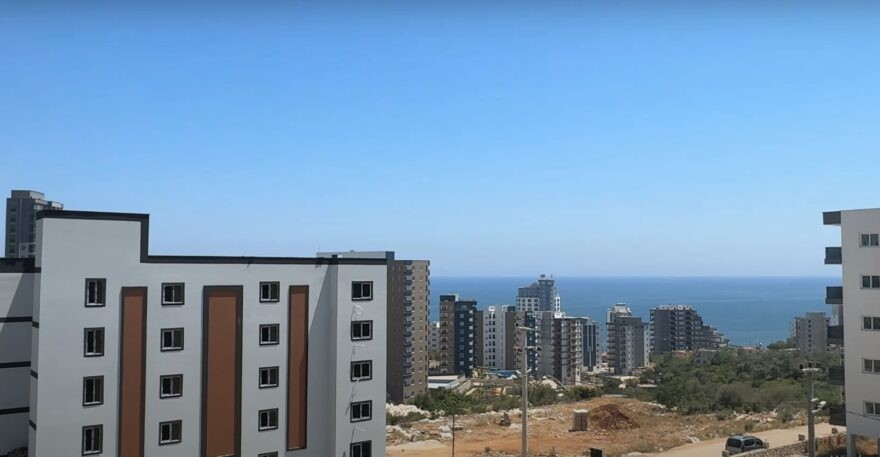
Photos of the complexes are used with the site owner’s consent.