What Does Law No. 2644 on Land Registry Regulate?
In short: what is and is not allowed under Law No. 2644
✅ Allowed
- Buy property if your country is on the President’s list (Article 35) (which countries are on the list: see the expandable block below).
- Own up to 10% of the privately owned area of a district and up to 30 ha per person nationwide; the President may raise the 30 ha up to twofold.
- Buy through a Turkish company with at least 50% foreign capital, for the activities in its articles (Article 36).
- Complete the deal with land registry officials, including when the parties are in different offices or abroad (Article 26).
- Inherit property on a certificate of inheritance confirmed by a Turkish court (Article 37).
⛔ Not allowed
- Buy in military prohibited zones, security zones and strategic areas.
- Exceed the limits: the excess is liquidated and the money is paid to the owner (Article 35).
- Leave an undeveloped plot without a project for more than two years.
- Buy property directly through a foreign company established under the laws of another country: only under special laws.
- Sign the deed without a tax number: the numbers of the parties are entered in the official deed (Article 26).
This is a short summary of the text of the law. Details, quotations of articles and links to the official texts are below. The visa-free stay depends on your citizenship, and amounts and lists of countries are set by secondary acts, so check them on the date of your decision.
Which countries are on the list that allows foreigners to buy property? (click to expand)
What the law says. Article 35 of Law No. 2644 contains no countries. It says that foreign citizens of the countries determined by the President of Turkey may acquire property, and that the President may restrict or prohibit acquisition by country, person, region, period, type and area. The list exists as a decision, not as a list in the text of the law.
What the official guides say. Guides of the General Directorate of Land Registry and Cadastre (TKGM) name about 183 countries whose citizens may acquire property (TKGM guide). The TKGM guide on citizenship through property says that citizens of Syria cannot acquire property in Turkey (TKGM guide, 2021 edition).
What we did not find. We did not find a complete official list of countries as a separate table in open access. Sources disagree: the numbers 183, 184 and 195 appear. So we do not publish our own list and do not retell lists from blogs. Check your citizenship directly.
How to check your country before a deposit:
- Ask at any land registry office (tapu müdürlüğü): staff see the current list in their system.
- Ask TKGM at tkgm.gov.tr or on the Your Key Türkiye portal.
- Ask a lawyer who works in Turkey to confirm the answer in writing.
- Keep the answer with its date: the President may change the list.
Law No. 2644 on Land Registry (Tapu Kanunu) determines how property is registered in Turkey and who does it, and Articles 35–37 contain the rules for foreigners. It is the law under which every buyer receives a title deed (tapu). Below, the law is explained in plain language, with quotations from the articles in Turkish and a translation, and links to the official text.
The material is for information. The countries whose citizens may buy, and some restrictions, are determined by Presidential decisions, so they must be checked on the date of the deal.
Where the law is published
The law was adopted on 22 December 1934 and published in the Official Gazette on 29 December 1934 under No. 2892. Current text: mevzuat.gov.tr, Law No. 2644. The law has been amended many times: among the amendments are Laws No. 4358 (1998), No. 5444 (2005), No. 5831 (2009), No. 6302 (2012), No. 7099 (2018) and No. 7181 (2019), as well as Decree No. 698 (2018). The practical work is done by the General Directorate of Land Registry and Cadastre (TKGM), website tkgm.gov.tr.
What the law regulates
The law describes the procedure for registering property in the land register: who represents the state and legal entities in deals (Articles 1–4), how the filling of sea plots and other special categories of land are handled (Articles 8–25), how official deeds are drawn up (Article 26), how entries are corrected (Articles 30–34) and how the rights of foreigners and their inheritance are registered (Articles 35–37). The law begins with technical provisions of the 1930s, but the modern Articles 26 and 35–37 are in active use.
Article 26: the official deed and the tax number
Deals, in particular the establishment of rights to a floor or a flat, are formalised by land registry officials. The official deed states the details of the parties and their tax numbers. The deed is signed by the parties and the officials, and the director or an authorised official approves it.
“Resmi senede tarafların kimlik bilgileri ile birlikte vergi kimlik numaraları da kaydedilir” (Article 26). The details of the parties and their tax identification numbers are entered in the official deed.
This explains why a foreigner must obtain a tax number before the deal. Article 26 also contains protection for the buyer of a new-build: a contract of sale of property certified by a notary can be annotated in the register at the request of one of the parties. If within five years after the annotation the sale or the establishment of the right has not been completed, the annotation is removed. The 2019 amendment (Law No. 7181) allowed a contract to be drawn up when the parties are in different land registry offices or abroad: the will of each party is received by officials separately. The procedure is set by the regulation.
Article 35: foreigners
This is the main provision for buyers. It is set out in the version of Law No. 6302 of 3 May 2012. Foreign natural persons, whose countries are determined by the President, may acquire property and limited real rights, subject to the legal restrictions. The principle of reciprocity was removed from the article by the 2012 amendment.
“Yabancı uyruklu gerçek kişilerin edindikleri taşınmazlar … toplam alanı, özel mülkiyete konu ilçe yüz ölçümünün yüzde onunu ve kişi başına ülke genelinde otuz hektarı geçemez” (Article 35). The total area of property acquired by a foreigner may not exceed ten percent of the privately owned area of the district and thirty hectares per person nationwide.
The President may raise the per-person limit up to twofold, and may restrict, partly or fully suspend or prohibit acquisition by country, person, region, period, type and area. For those who bought an undeveloped plot there is an additional requirement: the project must be submitted for approval to the relevant ministry within two years, and the approved project and the deadlines are entered in the register. Maps and coordinates of military prohibited zones, security zones and strategic areas are passed to the land registry authority, and deals are carried out according to this data.
If property is acquired in breach of the article, used for a purpose other than the declared one, or the project is not carried out in time, the property is liquidated after a period set by the Ministry of Finance (no more than one year), and the proceeds are paid to the owner. This rule also applies to inherited property if it exceeds the established limits.
Article 36: companies with foreign capital
Turkish companies in which foreign natural or legal persons hold at least fifty percent of the shares or have the right to appoint the majority of managers may acquire and use property for the activities stated in their articles of association. Article 35 separately states that foreign commercial companies established under the laws of other countries may acquire property only under special laws.
Article 37: inheritance of foreigners
The transfer of the property of foreign natural persons is formalised on the basis of certificates of the right of inheritance issued by Turkish courts or by competent bodies of the country and confirmed by a Turkish court. These certificates must comply with the Turkish rules on inheritance.
How to use the law in practice
Before paying a deposit, check whether your citizenship is on the list of countries determined by the President, and whether you would breach the area limits. Then obtain a tax number, order a valuation report and take out DASK insurance: how this works is described in the article on buying property as a foreigner. Which laws stand beside this act is covered in the overview “Which laws regulate the purchase of property by foreigners”, and you can look at flats in the Mersin property catalogue. An owner’s rights when buying from a developer can be checked with the article “How to check a developer in Turkey”.
How the law works in practice when buying
Reduced to a sequence of actions, it goes like this. The buyer and the seller come to the land registry, where officials check the documents and draw up the official deed. The deed records the details of the parties and the tax numbers, the parties and the officials sign it, and the director or an authorised official approves it. Then the transfer of the right is registered, after which the buyer receives the title deed. If it is a flat in a house under construction, the right to a floor or a flat (Kat İrtifakı) is registered, and after the house is completed it moves to ordinary ownership of the flat.
A natural person and a company: what is the difference
A natural person, a citizen of a country determined by the President, buys property under Article 35 and is subject to the area limits. Foreign commercial companies established under the laws of another country may acquire property only within special laws. A Turkish company in which foreigners hold at least half of the shares or appoint the majority of managers buys property under Article 36 for the activities named in its articles. This means that the way of buying determines not only convenience but also the set of rules that apply to you.
What the area limits mean, with an example
The limit of thirty hectares per person nationwide is three hundred thousand square metres. For an ordinary flat of one hundred square metres this limit is practically unnoticeable. It matters when it comes to land plots, orchards, large houses with land and the purchase of several plots. The limit of ten percent of the private area of a district applies separately: if the district is small and foreigners buy a lot, the limit may be used up. The current position can be found out at the land registry.
A checklist on Law No. 2644 for the buyer
- Find out whether your citizenship is on the list of countries determined by the President.
- Check the limits: ten percent of the district area and thirty hectares per person.
- Make sure the property is not in a military or protected zone.
- Obtain a tax number, which is entered in the official deed.
- For an undeveloped plot, remember the two-year period for submitting a project.
- If you are buying a flat under construction, find out whether the right to a floor or a flat has been registered.
- If you have a notarised contract of sale, ask for it to be annotated in the register.
Can a foreigner buy several flats
The law does not limit the number of properties: Article 35 contains no number of flats, only a ceiling on total area. A foreigner may buy several flats, houses or plots as long as their total area fits within ten percent of the privately owned area of the district and thirty hectares per person nationwide. So what matters is not the sum of the deals but the combined area of all the property.
The limit on the total area of acquired property
The limit is written for the total area of property and of limited real rights of an independent and permanent nature acquired by a foreigner. For flats of one hundred square metres, thirty hectares (three hundred thousand square metres) is practically unreachable, but when buying plots and large properties this ceiling matters. The ten percent ceiling is counted separately for each district, so in a small district it may be used up sooner. The President may raise the per-person limit up to twofold. How exactly the area of common premises and of shares is counted, the law does not say: clarify at the land registry. More on land in article No. 30, on joint purchase in article No. 40.
Conclusion
Law No. 2644 combines old registration rules with modern norms on the purchase of property by foreigners. Its Article 26 explains why a tax number is needed and how the sale annotation works, Article 35 sets the conditions and limits for foreign natural persons, Article 36 concerns companies and Article 37 inheritance. Read the text on the official portal and check Presidential decisions, because they change practice. The other questions of this section are on the page “Laws of Turkey”.
The material does not replace advice from a lawyer. The information was checked against the text of Law No. 2644 as of 21 October 2026.
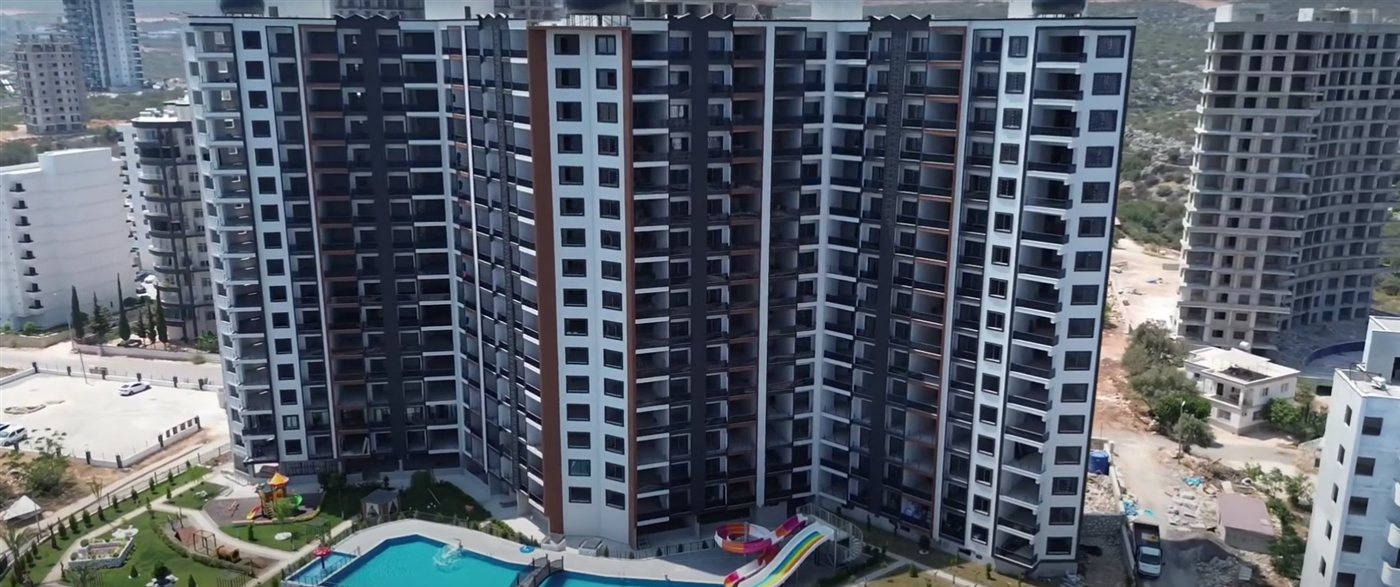
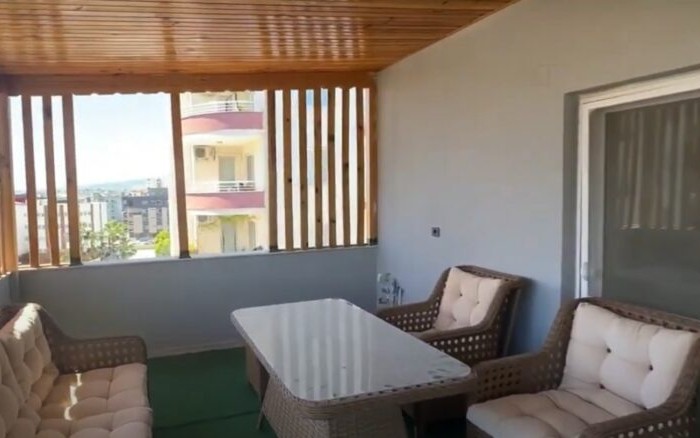
Photos of the complexes are used with the site owner’s consent.